 Photo Credit: Cy-Fair Helping Hands
News
Cy-Fair Helping Hands Launches “Pathways to Employment” to Help Working Families Build Lasting Financial Stability
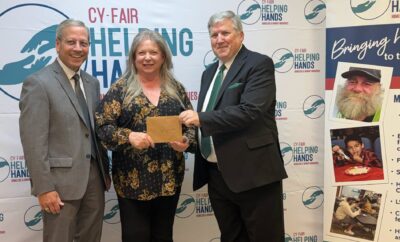
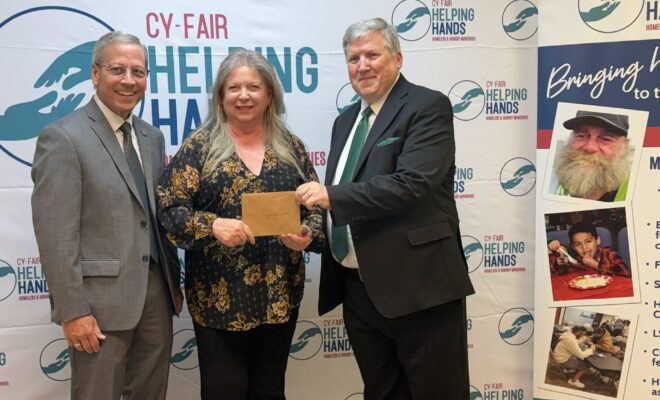
Cy-Fair Helping Hands (CFHH) launched Pathways to Employment, a workforce certification program for low-income adults in the Cy-Fair area. A grant from The Church of Jesus Christ of Latter-day Saints covers tuition, certification fees, training supplies, and transportation assistance for participants, along with food support for their households. Current CFHH clients are eligible to participate.

“We are deeply grateful to The Church of Jesus Christ of Latter-day Saints for this investment in our neighbors,” said Janet Ryan, Executive Director of CFHH. “The Church has been a faithful partner for years, and this grant takes that partnership to a new level. It doesn’t just meet a family’s needs today. It gives them the tools to build a different future.”
Why This Matters
More than 2,500 people receive food from the CFHH Food Pantry each month, and most of them are already working. They hold full-time or multiple jobs, yet their wages don’t cover basic household costs. According to the Rice University Kinder Institute, roughly 40% of Harris County households face food insecurity, nearly three times the national average. Houston Food Bank data shows that two-thirds of those households include at least one working adult.
“Our clients don’t lack a work ethic. They lack access to credentials that lead to livable wages,” Ryan said. “Food assistance keeps a family afloat today. Pathways to Employment can help them reach the point where they no longer need us.”
A Career, Not Just a Job
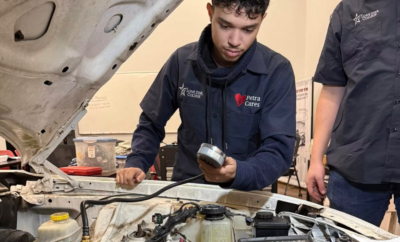
Participants earn industry-recognized credentials that can stack over time, so a first certification becomes the first step in a longer career. Training is offered through Lone Star College-CyFair and other local providers in fields with strong regional hiring demand: healthcare, logistics and transportation, skilled trades and safety, office administration, and food service. Participants now earning $10 to $14 an hour are expected to see wage increases of 60% or more, along with benefits and room to advance.
Support at Every Step
The grant removes the barriers that keep motivated people from finishing training:
- Training costs covered. Tuition, books, exam fees, and required gear such as scrubs or work boots are paid directly to providers.
- Case management. Case managers meet with participants every two weeks to help with practical obstacles, including transportation.
- Job readiness and placement. Participants receive financial literacy classes, résumé coaching, and interview preparation.
- Continued food support. Food from the Bishop’s Storehouse, the Church’s food distribution system, helps participants’ households stay food secure during training.
The program aims to help participants:
- Earn higher, more stable wages in careers with clear paths for advancement
- Become food secure and no longer need pantry assistance
- Build financial resilience, including an emergency savings buffer
- Create stability for their children, who are more likely to graduate when households are financially secure
Strengthening the Local Workforce
Local employers in healthcare, logistics, and the skilled trades report ongoing shortages of qualified workers. Pathways to Employment helps fill those positions with trained residents who can work close to home, which matters in a suburban area where limited public transit makes long commutes impractical for many low-income workers.
Built to Last
CFHH plans to make Pathways to Employment a permanent service rather than a one-time project. Outcomes tracked during the grant period will help CFHH secure additional foundation, corporate, and individual support in the years ahead.
Source: CFHH